
Off Script: Tamsulosin's Hidden Side Hustle
Learn how tamsulosin (Flomax) is used off-label to treat kidney stones, including its mechanism of action, dosing, and role in helping stones pass.


We're introducing a brand new series here on RxTeach called "Off Script" where we'll explore various off-label uses of prescription and non-prescription drugs in short articles. Join us today as we dive into why you might see tamsulosin (Flomax), a drug typically used in males, prescribed for a female instead!
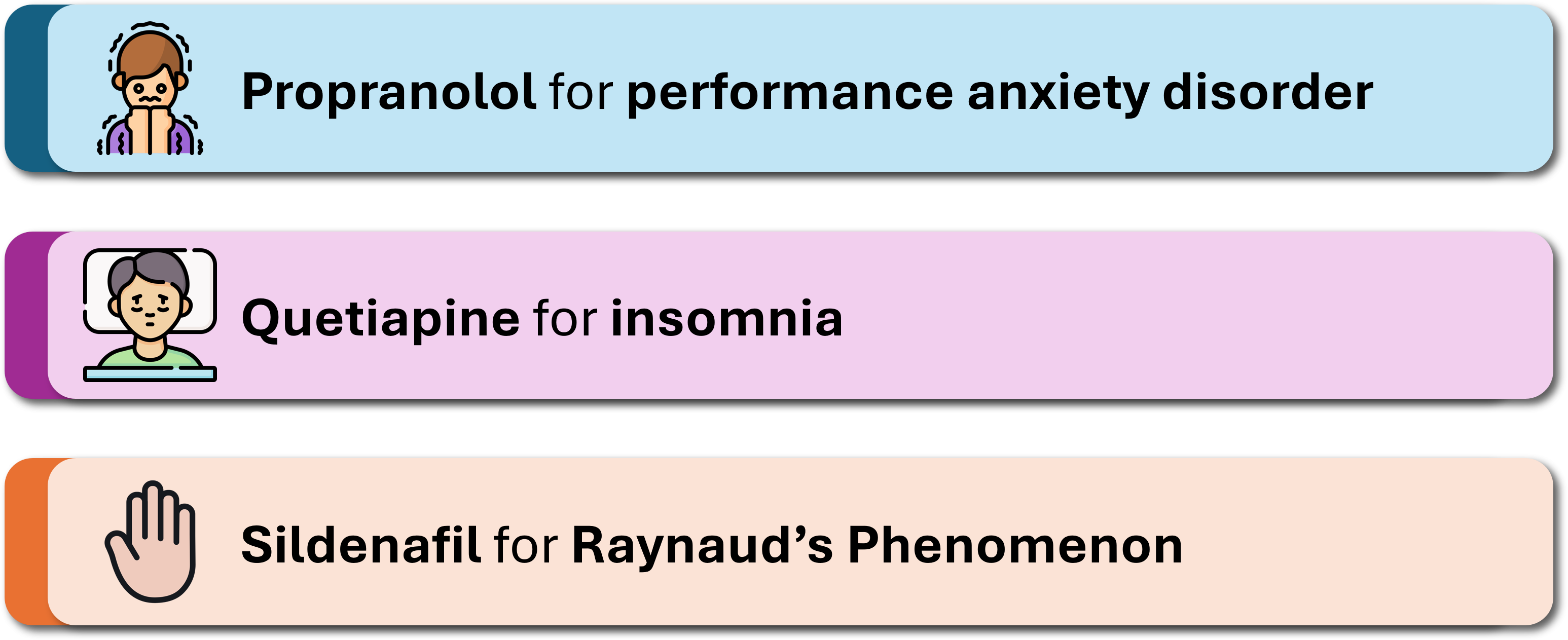
When dealing with medications, you'll likely see the words "FDA-approved indication(s)". The Food and Drug Administration (FDA) is the federal agency regulating the safety and efficacy of drugs within the United States.1 They use evidence from research studies like clinical trials and case studies to officially approve specific uses of medications. A single drug, however, can have a seemingly endless amount of uses in several clinical scenarios to a point where it's almost impossible to receive official FDA approval for all its uses. This is where you'll see "Off-label" come into play. Simply put, off-label just means that the FDA has not approved the specific use of a drug for a specific indication. Here are some common examples you may be familiar with:
Now imagine you're a pharmacist and the first prescription you see after opening is tamsulosin 0.4 mg PO once daily for a... Ms. Jane Doe? Is this right? 🤔 Why would tamsulosin, a drug frequently prescribed for males, be given to a female? Upon further investigation, you discover that tamsulosin has an off-label use for urolithiasis (kidney stones). Let's dive into the science behind this!
Physiology & Pharmacology2-7
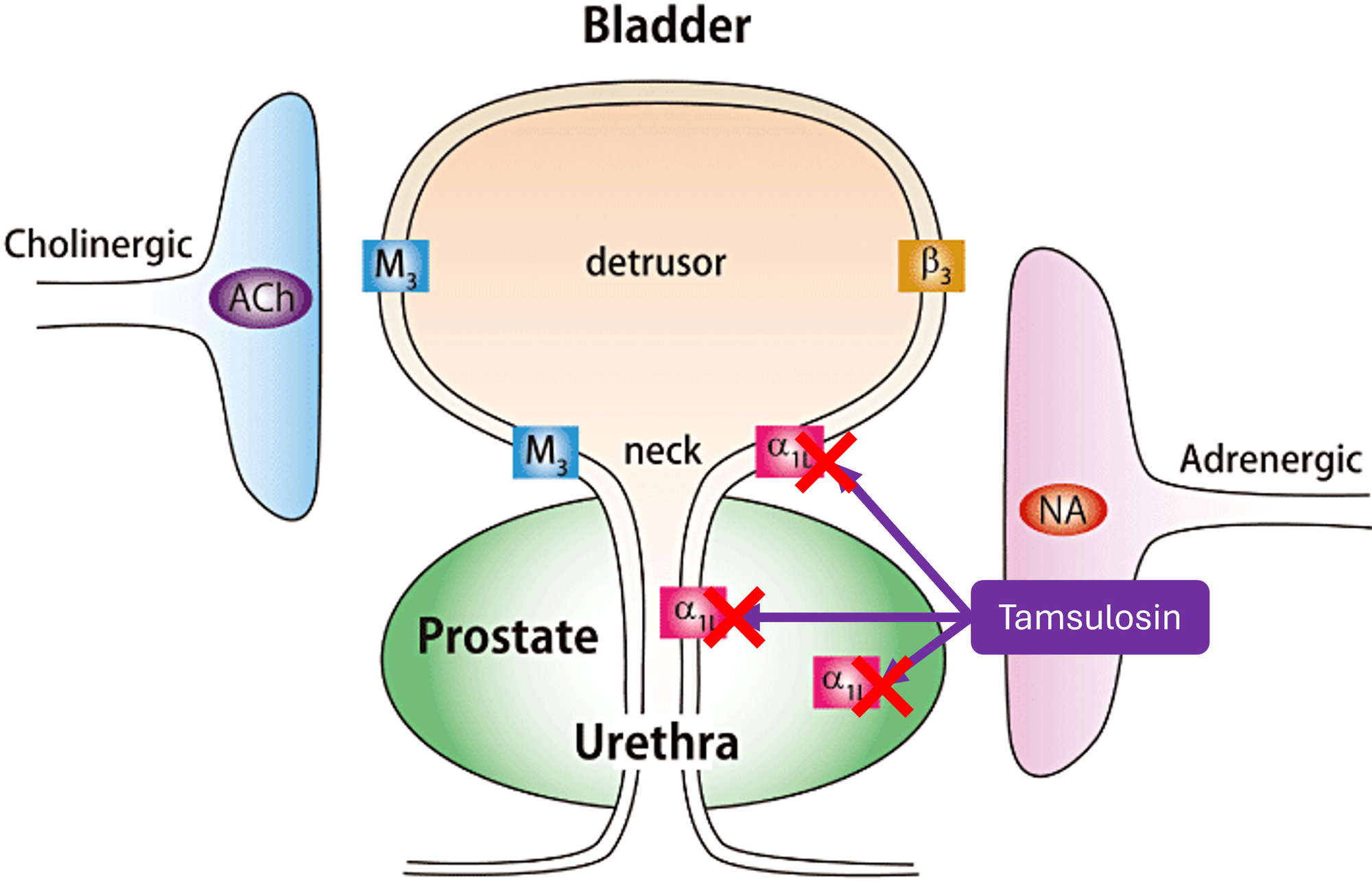
α1-receptors are found predominantly in the prostate gland, prostatic capsule, and urethra (internal sphincter). Normally, α1-receptors are stimulated by the binding of norepinephrine (noradrenaline) released from the sympathetic nervous system. This contracts the smooth muscle of the urethra/internal sphincter and prostate (in males) at the base of the bladder, preventing the outflow of urine.
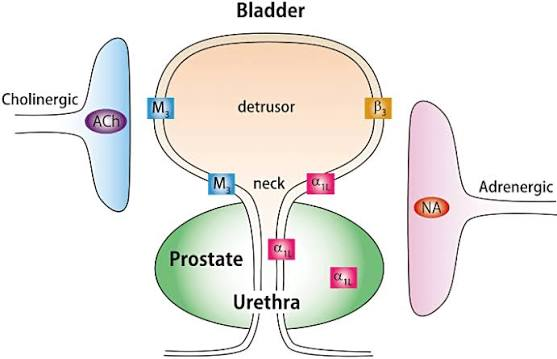
Tamsulosin (Flomax) is a selective α1-adrenoceptor antagonist (α1-blocker). Relaxation of the prostate and bladder smooth muscles with tamsulosin is associated with improved urine flow and alleviation of lower urinary tract symptoms (LUTS) in patients with benign prostatic hyperplasia (BPH).
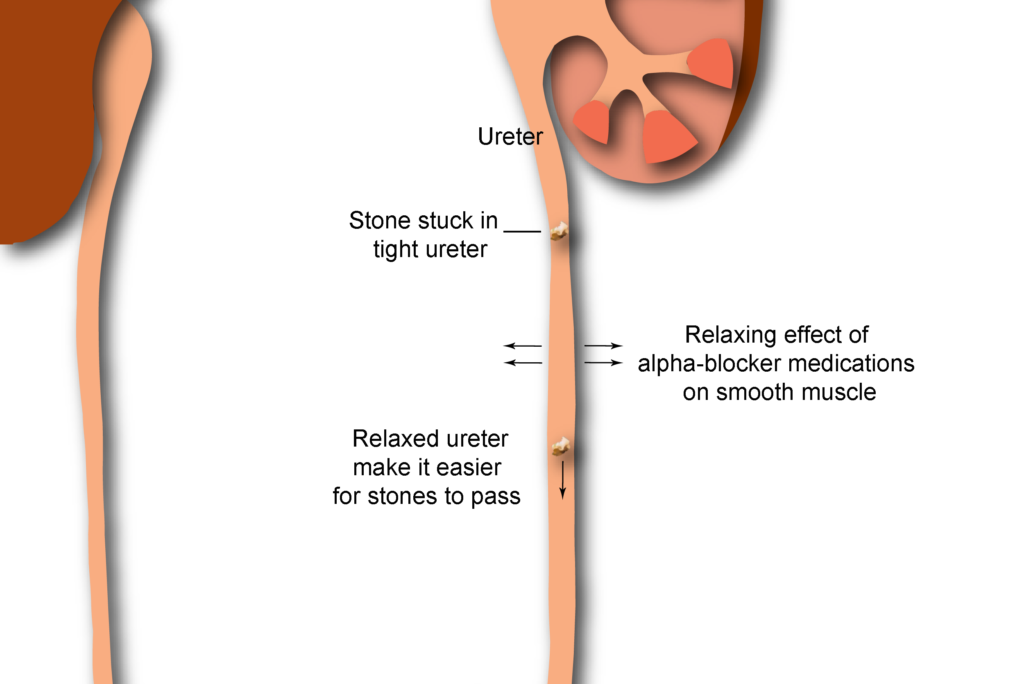
α1-receptors are also found in the ureter (connection between the kidney and the bladder). This is the proposed site of action for tamsulosin in facilitating the expulsion of kidney stones. When tamsulosin blocks the α1-receptors in the ureter, it relaxes the smooth muscles, making it easier for stones to pass through.
Dosing8,9
The typical dosing of tamsulosin for the FDA-approved indication of BPH is 0.4 mg PO once daily. If the patient doesn't respond to this dose after 2 to 4 weeks, the dose may be doubled to 0.8 mg PO once daily. If therapy is discontinued or interrupted for several days, then it's recommended to restart with 0.4 mg PO once daily.
For the off-label indication of kidney stones, the dose is the same: 0.4 mg PO once daily until the stone passes or for up to 4 weeks. Sometimes, tamsulosin is used as an adjunctive therapy following shock wave lithotripsy to facilitate the clearance of residual stones.
No dosage adjustments are necessary for altered kidney or liver functions.
Summary
Tamsulosin is an α1-receptor blocker that has an off-label indication for kidney stones. When given, it helps to relax the smooth muscle of the ureter to allow easier passage of the stones. So the next time you see a tamsulosin prescription for a female patient, it might be for the off-label use of urolithiasis!

References:
- https://www.fda.gov/
- Andersson KE, Arner A. Urinary bladder contraction and relaxation: physiology and pathophysiology. Physiol Rev. 2004;84(3):935-986. doi:10.1152/physrev.00038.2003
- Nishimune, A., Yoshiki, H., Uwada, J., Anisuzzaman, A., Umada, H. and Muramatsu, I. (2012), Phenotype pharmacology of lower urinary tract α1-adrenoceptors. British Journal of Pharmacology, 165: 1226-1234. https://doi.org/10.1111/j.1476-5381.2011.01591.x
- Dunn CJ, Matheson A, Faulds DM. Tamsulosin: a review of its pharmacology and therapeutic efficacy in the management of lower urinary tract symptoms. Drugs Aging. 2002;19(2):135-161. doi:10.2165/00002512-200219020-00004
- https://www.teachmepharmacy.info/urinary-renal/prostate-male-urological-disorders/a1-blockers/
- Sun Y, Lei GL, Yang L, Wei Q, Wei X. Is tamsulosin effective for the passage of symptomatic ureteral stones: A systematic review and meta-analysis. Medicine (Baltimore). 2019;98(10):e14796. doi:10.1097/MD.0000000000014796
- Rivard R. Tamsulosin: ureteral stones (distal). Hosp Pharm. 2015;50(1):31-33. doi:10.1310/hpj5001-31
- Tamsulosin. Lexi-Drugs. UpToDate Lexidrug. UpToDate Inc. https://online.lexi.com.
- Chen K, Mi H, Xu G, et al. The efficacy and safety of tamsulosin combined with extracorporeal shockwave lithotripsy for urolithiasis: A systematic review and meta-analysis of randomized controlled trials. J Endourol. 2015;29(10):1166-1176. doi:10.1089/end.2015.0098

*Information presented on RxTeach does not represent the opinion of any specific company, organization, or team other than the authors themselves. No patient-provider relationship is created.