
Apothecary’s Apprentice: The Surprising Origins of Metformin
Metformin’s plant-based origins and rise to prominence reveal why it became the only biguanide widely used in diabetes care today.


Metformin (Glucophage) is the drug that inspired “Apothecary’s Apprentice,” as it was shocking that this antidiabetic staple was ultimately sourced from a plant.
Metformin is a member of the biguanide drug class – the only one left standing.1 So, what made metformin the sole survivor of this class? And what happened to its biguanide cousins?
History of the Biguanides
The biguanide class as a whole derives from Galega officinalis, also known as galega, goat’s rue, or French lilac.2 Galega has long been used as an herbal remedy in Europe to alleviate the symptoms of type 2 diabetes mellitus, along with other conditions as dissimilar as tuberculosis and bubonic plague.2
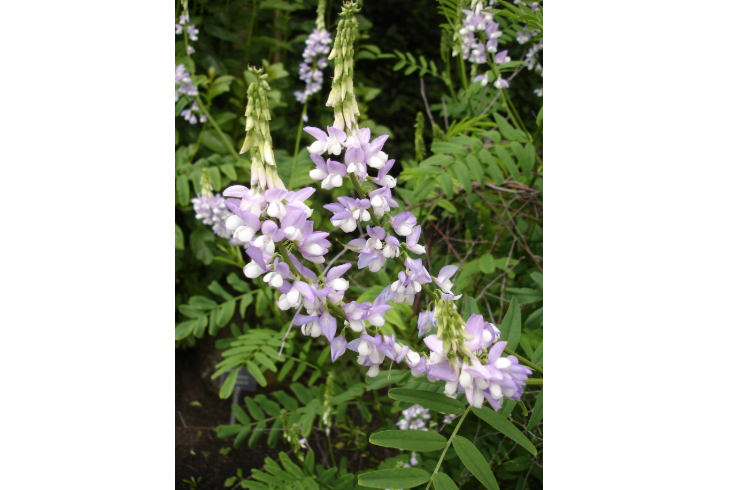
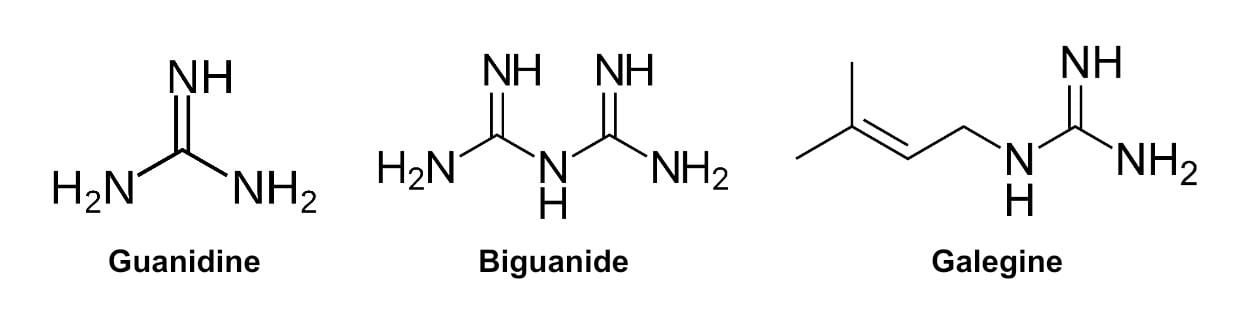
Galega contains two closely related compounds that both have glucose-lowering properties: guanidine and galegine.3 Both are toxic, however, and required further research before becoming feasible remedies.3
The compound biguanide – not to be confused with the biguanide class – is composed of two guanidine groups, hence the bi- prefix. While biguanide itself is not found in galega, the herb’s antihyperglycemic properties garnered enough attention to spur further research.
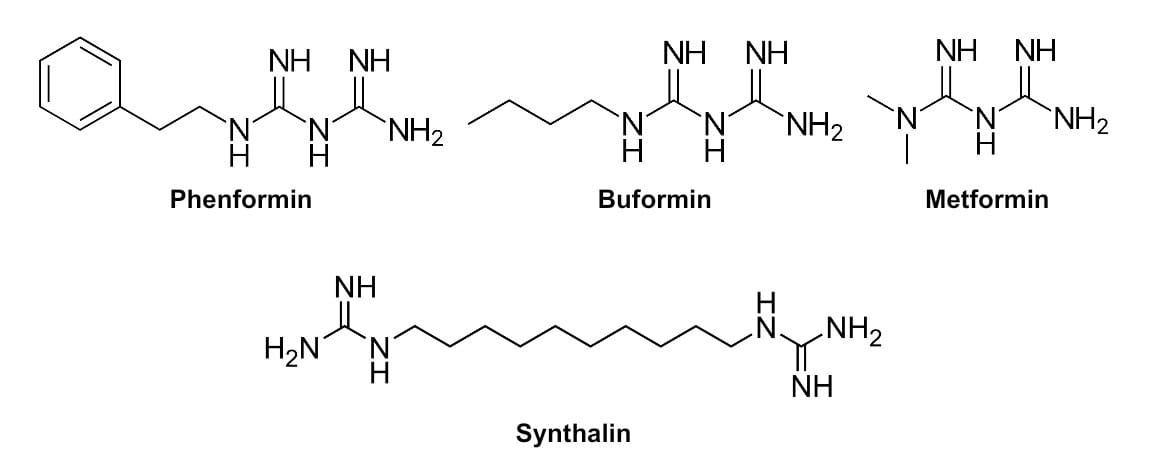
Metformin itself was discovered in 1922.4 The glucose-lowering properties of metformin have been known almost since the start, but were ignored in favor of other therapies in vogue at the time.4
The main focus of oral antidiabetic therapy at that time was synthalin, another biguanide.4 Synthalin was released in 1928, but was quickly dealt a double blow – not only was insulin becoming more available, but synthalin was toxic.4 Interestingly, synthalin also caused gastrointestinal side effects like diarrhea – a foreshadowing of later members of this class.4
Phenformin and buformin came along in the 1950s, but they too were removed from the market due to unacceptably high incidences of fatal lactic acidosis5,6 – an acidification of the blood due to a buildup of lactic acid.7
It was after these failed attempts at controlling diabetes that metformin reemerged as an antihyperglycemic option.
Metformin Rises to the Top
Metformin was approved by the FDA in 1994, though the drug had already been in use in Europe for several years.1,8 Now, metformin is the most prescribed antihyperglycemic agent available, as well as the American Diabetes Association’s preferred first-line agent.1,8,10
While nominally for the treatment of type 2 diabetes, metformin can be used off-label for gestational diabetes, polycystic ovarian syndrome, and even prediabetes.1 Metformin does its job and leaves – it lowers glucose production in the liver, is not metabolized or protein-bound, and is excreted mostly unchanged via the kidneys.1 It also increases insulin sensitivity and decreases intestinal absorption.1
There are only a few drawbacks to metformin. One of these is that metformin is contraindicated in patients with severe renal dysfunction, measured by a creatinine clearance of <30 mL/min, and should not be initiated at a creatinine clearance of <45 mL/min.1,10 Fortunately, there are other good antidiabetic agents for this population, including some SGLT2 inhibitors.10
Perhaps the most notable adverse effect is a tendency to induce gastrointestinal upset, or dyspepsia, in up to 30% of patients.1 This is why metformin is usually started at a low dose and titrated up.9
For immediate-release metformin, patients usually start at 500 mg once or twice daily (or 850 mg once daily), and only titrated up to 1,000 mg twice daily (or 850 mg twice daily) after incremental increases of 500 mg every seven days.9 For extended-release metformin, patients usually start at 500-1,000 mg once daily and titrate up in 500-mg increments every seven days to a maximum of 2,000 mg once daily.9
Metformin also lowers vitamin B12 levels, sometimes to a point where supplementation is necessary.1
Metformin is officially considered weight-neutral, but the ADA notes the “potential” for modest weight loss.10 Hypoglycemia is generally rare when taken as directed – something metformin has over other antidiabetic therapies like DPP-4 inhibitors and sulfonylureas.1
Metformin does retain a black box warning for the same illness caused by its biguanide cousins: lactic acidosis.1 However, the incidence rate of lactic acidosis with metformin is low and, barring a handful of drug interactions, not a reality most patients face.1
Patients with unstable heart failure, hepatic impairment, or preparing for administration of iodinated contrast dye are also recommended to avoid metformin.1 Alcohol is also not recommended while taking metformin.1
Overall, however, metformin is safe and effective, and it’s even a team player. While metformin monotherapy is common, many patients take metformin concomitantly with other antidiabetic medications, including insulin, SGLT2 inhibitors, or GLP-1 receptor agonists.10
A Rebirth for the Dead
While metformin sits in the spotlight for diabetes treatment, its biguanide relatives have proven not ineffective, but too toxic to warrant use. However, the stories of phenformin and buformin may not be over yet.
Newer research suggests that phenformin and buformin have anticancer properties.5,6 Phenformin is described as an “authentic tumor disruptor” due in part to its efficacy in disrupting glucose metabolism.5 Buformin also attacks cancer cells through a variety of mechanisms.6
Biguanides have also been confirmed to have antifungal activity and may complement voriconazole, fluconazole, or amphotericin therapy.6,11 Only time will tell if these slumbering biguanides come back into prominence.
Until then, metformin remains a ubiquitous drug in diabetes care and pharmacy as a whole.
References
- Corcoran C, Jacobs TF. Metformin. National Institutes of Health. StatPearls Publishing, LLC. 2023 Aug 17.
- Bednarska K, Kuś P, Fecka I. Investigation of the Phytochemical Composition, Antioxidant Activity, and Methylglyoxal Trapping Effect of Galega officinalis L. Herb In Vitro. Molecules. 2020 Dec 9;25(24):5810.
- Mooney MH, et al. Mechanisms underlying the metabolic actions of galegine that contribute to weight loss in mice. Br J Pharmacol. 2008 Feb 25;153(8):1669–1677.
- Ramadori GP. Synthalin, Buformin, Phenformin, and Metformin: A Century of Intestinal “Glucose Excretion” as Oral Antidiabetic Strategy in Overweight/Obese Patients. Livers. 2025;5(3):35.
- García Rubiño ME, et al. Phenformin as an Anticancer Agent: Challenges and Prospects. Int J Mol Sci. 2019 Jul 5;20(13):3316.
- Geng Y, et al. Extensive therapeutic effects, underlying molecular mechanisms and disease treatment prediction of Metformin: a systematic review. Translational Research. 2024 Jan;263:73-92.
- Lactic Acidosis. Cleveland Clinic. 2023 Jun 13.
- Bailey CJ. Metformin: historical overview. Diabetologia. 2017 Aug 3;60:1566-1576.
- Metformin. Lexidrug.
- American Diabetes Association. Pharmacologic Approaches to Glycemic Treatment: Standards of Care in Diabetes—2026. Diabetes Care 2026;49(Supplement_1):S183-S215.
- Xu S, et al. Biguanides enhance antifungal activity against Candida glabrata. Virulence. 2018 Aug 1;9(1):1150-1162.
*Information presented on RxTeach does not represent the opinion of any specific company, organization, or team other than the authors themselves. No patient-provider relationship is created.