
Breast Cancer: Epidemiology, Staging, Risk Factors, Presentation, and Diagnosis
Today, we're bringing you an introduction to breast cancer, including its underlying biology and clinical significance!


Today, we're bringing you an introduction to breast cancer, including its underlying biology and clinical significance!
Background
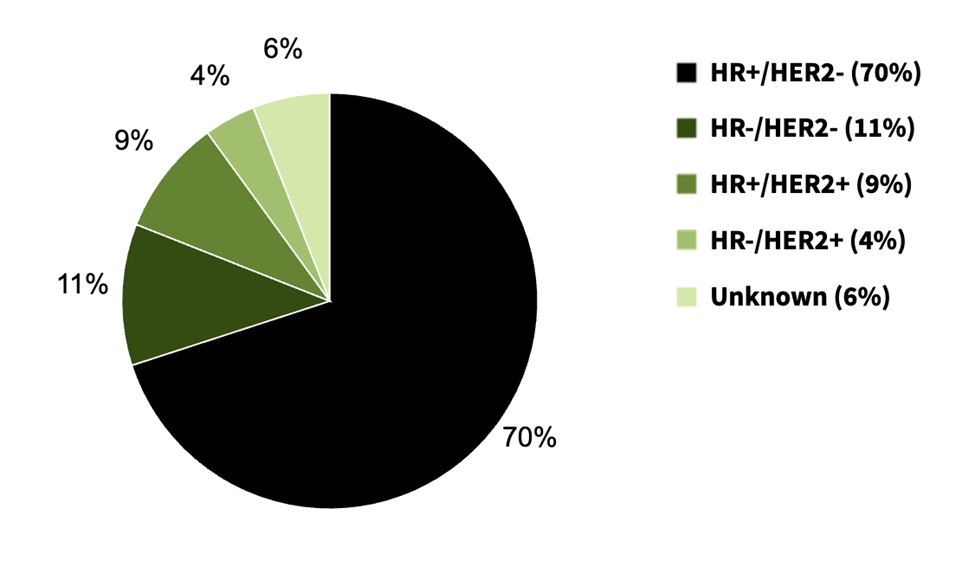
Breast cancer is the most commonly diagnosed cancer worldwide1. Although it primarily affects women, men can also develop breast cancer2. Classification is based on the presence or absence of hormone receptors (HR), which includes either estrogen receptors (ER) or progesterone receptors (PR), and human epidermal growth factor receptor 2 (HER2) overexpression3. Based on the expression of these biomarkers, breast cancer is categorized into four major subtypes:
- HR+/HER2-
- HR+/HER2+
- HR-/HER2+
- Triple-negative breast cancer (ER-/PR-/HER2-)
Among these, HR+/HER2- is the most common subtype, accounting for approximately 70% of all breast cancer cases. On the other hand, HR-/HER2+ is the least common subtype, only accounting for about 5% of all cases3.
Staging
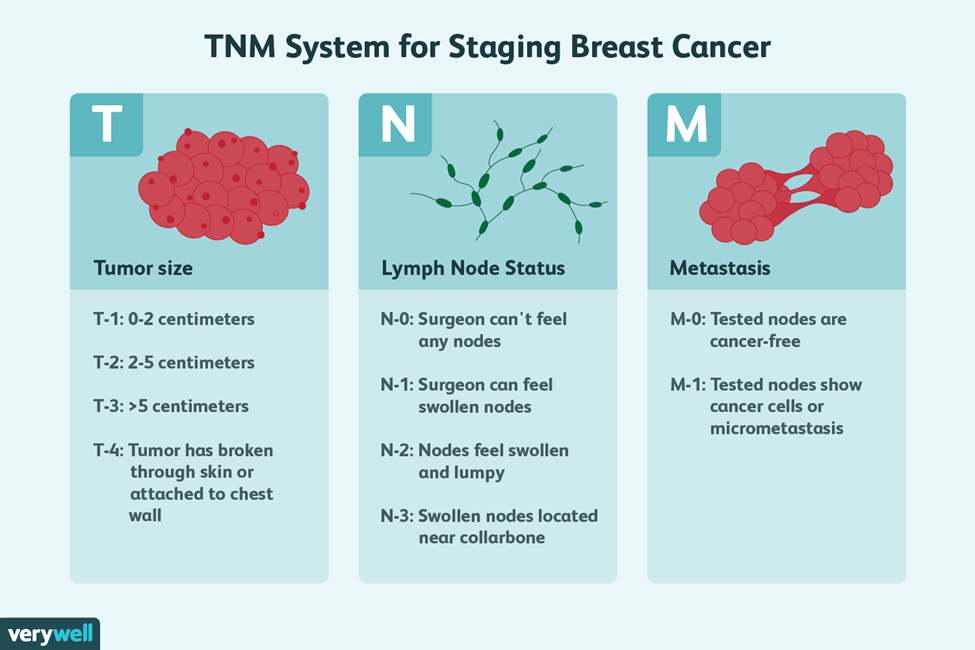
A numerical classification is assigned to indicate the stage of the cancer. The number is determined by three factors: tumor node metastasis (TNM) value, grade, and biomarker/receptor status4.
- TNM staging uses 3 categories to describe the size of the tumor and the extent to which the cancer has spread. The first category is tumor (T), which is the size and location of the tumor. Lymph node (N) is the second category, which determines the location of the lymph nodes where the cancer has spread and the size of the cancer in the lymph nodes. The third category is metastasis (M), and it determines the spread of cancer to other parts of the body.
- The grading system assesses how abnormal the cancer cells look under a microscope and how rapidly the cancer cells are likely to spread. Cancer abnormality is determined based on 3 features: how much of the tumor tissue has normal breast ducts, the size and shape of the nuclei in the tumor cells, and how many dividing cells are present4. The 3 possible grades are G1 (low grade or well differentiated), G2 (intermediate grade or moderately differentiated), and G3 (high grade or poorly differentiated).
- Lastly, biomarker testing helps determine whether breast cancer cells express particular biomarkers, such as HR or HER2.
Stage 0 includes noninvasive breast cancer4. In this stage, abnormal cells are found in the breast, but there is no evidence that these cells have spread. Stage I includes cancer that is small (less than 2 centimeters) and only in the breast tissue, or lymph nodes close to the breast. In stage II breast cancer, the tumor is larger than 2 centimeters, and there is typically cancer in the breast or nearby lymph nodes or both. In stage III breast cancer, cancer can be found in the lymph nodes close to the breast, the skin of the breast, or the chest wall. Stage IV breast cancer, also known as metastatic breast cancer (MBC) means that the cancer has spread to other parts of the body, such as the bones or lungs4. MBC is incurable, and therapeutic goals are mostly palliative5,6.
Risk Factors
The risk of developing breast cancer is influenced by a combination of non-modifiable and modifiable factors:
- Age is one of the most important non-modifiable risk factors as most breast cancers are diagnosed in individuals over 50 years of age7. Certain inherited genetic mutations, particularly in the (BReast CAncer) BRCA1 and BRCA2 genes, also substantially increase breast cancer risk. Prolonged exposure to endogenous hormones is associated with a higher likelihood of developing breast cancer; therefore, women who begin menstruation before age 12 or experience menopause after age 55 are at increased risk. A personal or family history of breast cancer further elevates risk, as does prior radiation therapy to the chest or breasts before age 30.
- Modifiable risk factors include physical inactivity, alcohol consumption, being overweight or obese, use of hormone replacement therapy during menopause, and oral contraceptive use7.
Several lifestyle and reproductive factors are associated with a reduced risk of breast cancer. Maintaining a healthy body weight (body mass index of 18.5-24.9 kg/m²) and limiting or avoiding alcohol consumption can help lower breast cancer risk8. Reproductive factors, such as having a full-term pregnancy before the age of 20 and breastfeeding for several months or longer after childbirth, have also been shown to reduce the risk of developing breast cancer8.
Signs & Symptoms
Signs and symptoms of breast cancer can include a breast lump that feels different from the surrounding tissue, a nipple that is flattened or turns inward, or any changes in the color of the breast skin, size or shape of the breast. Peeling or crusting of the skin on the breast is also a sign of breast cancer9.
It is important to distinguish breast changes that may not be caused by breast cancer, but rather other things such as benign breast conditions or hormones. Benign breast conditions may cause signs or symptoms such as lumps or nipple discharge, making it difficult to tell apart from breast cancer. Sometimes other exams or tests may be required to make a clear diagnosis10. One example of benign breast conditions is adenosis of the breasts, which occurs when glands are enlarged. Another example is duct ectasia, which occurs when a breast duct widens, and its walls thicken. Changes in hormone levels can also cause your breasts to change in size or shape10. Because many of these symptoms are so similar, it is important to have any new breast mass or changes checked by a healthcare professional.
Diagnosis
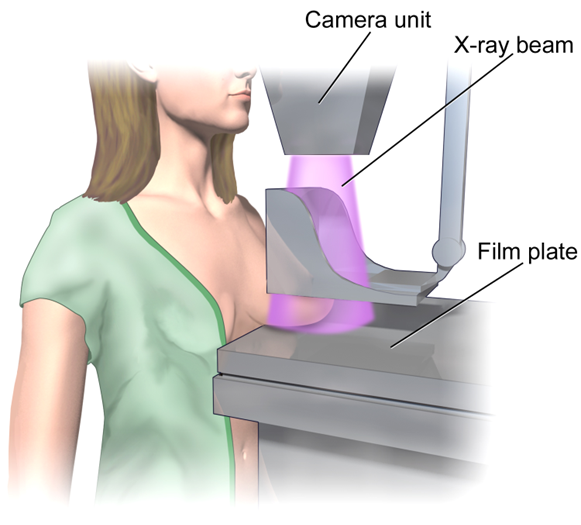
Breast cancer diagnosis often involves a breast exam, a mammogram, breast magnetic resonance imaging (MRI) and biopsy11. During a breast exam, the health professional feels the breasts, collarbones and armpit area for lumps. Mammograms are used to screen for breast cancer, and are essentially an x-ray of breast tissue. MRIs are used to look for any other areas of cancer in the affected breast. A biopsy is the removal of a sample of tissue for testing in a lab. The health professional will use a needle to draw tissue from the breast and place a small marker at the biopsy site to identify the area for monitoring or surgical planning.
Treatment for breast cancer varies depending on what stage and type of breast cancer patients have. There are a variety of treatment options ranging from surgery to chemotherapy to palliative care. In a future article, we will dive deeper into breast cancer treatment types and how they are selected based on a patient's individual disease characteristics.
About the Author

References
- Sung H, Ferlay J, Siegel RL, et al. Global Cancer Statistics 2020: GLOBOCAN Estimates of Incidence and Mortality Worldwide for 36 Cancers in 185 Countries. CA Cancer J Clin. 2021;71(3):209-249. doi:10.3322/caac.21660
- Male Breast Cancer. Breastcancer.org. 2026.
- Cancer Stat Facts: Female Breast Cancer Subtypes. National Cancer Institute. 2026.
- Stages of Breast Cancer: Female Breast Cancer Subtypes. National Cancer Institute. 2026.
- Cardoso F, Senkus E, Costa A, et al. 4th ESO-ESMO International Consensus Guidelines for Advanced Breast Cancer (ABC 4)†. Ann Oncol. 2018;29(8):1634-1657. doi:10.1093/annonc/mdy192
- Irvin W Jr, Muss HB, Mayer DK. Symptom management in metastatic breast cancer. Oncologist. 2011;16(9):1203-1214. doi:10.1634/theoncologist.2011-0159
- Breast Cancer Risk Factors. U.S. Centers for Disease Control and Prevention. 2026.
- Howlader N, Cronin KA, Kurian AW, Andridge R. Differences in Breast Cancer Survival by Molecular Subtypes in the United States. Cancer Epidemiol Biomarkers Prev. 2018;27(6):619-626. doi:10.1158/1055-9965.EPI-17-0627
- Abraham J, Gulley JL. Breast cancer. In: The Bethesda Handbook of Clinical Oncology. 6th ed. Kindle edition. Wolters Kluwer; 2023.
- Signs and Symptoms of Breast Cancer. American Cancer Society. 2026.
- Cancer Facts & Figures 2025. American Cancer Society. 2025.

*Information presented on RxTeach does not represent the opinion of any specific company, organization, or team other than the authors themselves. No patient-provider relationship is created.