
Apothecary’s Apprentice: The Secrets of Senna
A pharmacist's guide to senna: its origins, clinical uses, safety considerations, and comparison to other laxatives.


Apothecary’s Apprentice is a new column on RxTeach by Dylan Hembrough, PharmD candidate. In this column, he will explore the history behind commonly-used drugs with origins in the natural world.
You can find all Apothecary's Apprentice articles here.
What is Senna?
The Senna alexandrina plant is native to upper Egypt1 and known for its beautiful yellow flowers. It’s also a laxative.
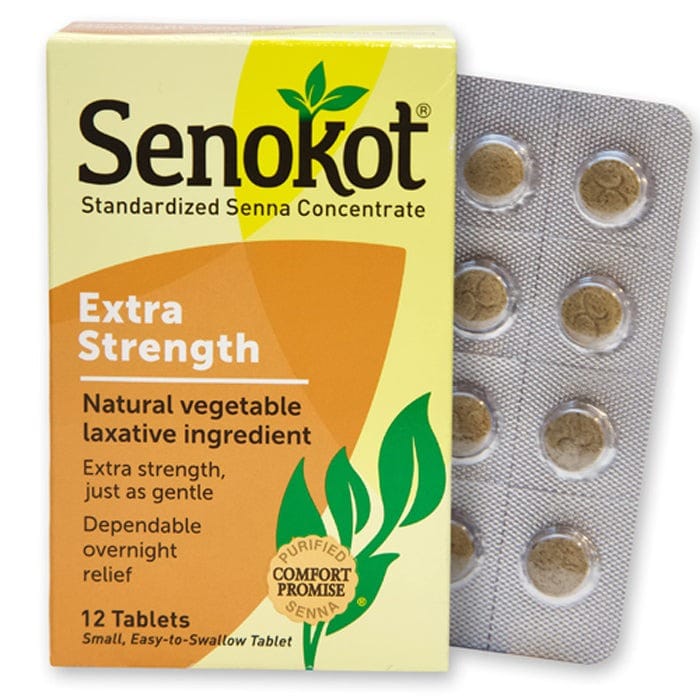
Senna is approved in the U.S. for constipation and is available over-the-counter. Available under the brand names Senokot and Ex-Lax, as well as the generic sennosides, senna comes in a variety of dosage forms, including oral tablets, oral capsules, chewable tablets, and liquid.2
It works quickly, usually producing a bowel movement within 6-12 hours of administration.5

History
Humans have been using senna for thousands of years – it first appears in the historical record in 3150 BCE, aptly in its homeland of Egypt.3 While used in wine and tea back then, Arabian physicians began using it as a medicinal laxative around 850 CE.3 In fact, the name “senna” comes from the Arabic sanā.4
Chemicals contained within the plant called sennosides – which you may see instead of “Senna” on the label – stimulate the bowels by irritating the intestinal lining and increasing motility.2,6 Importantly, products that do not contain sennosides, like senna leaf extract syrup and senna pod extract, are considered dietary supplements in the U.S., not medications.6
Pros and cons
Despite its efficacy as a laxative, senna is not without its problems. It is only intended for short-term use due to the potential for dependence and bowel dysfunction to develop,2 limiting its over-the-counter use to no longer than one week.6
While senna can be used for constipation in patients of any age, it is not recommended as an over-the-counter therapy in children less than two.6 It must be administered two hours before or after other medications and preferably at nighttime, which may also be a challenge in very young patients.6 However, it is safe for a breastfeeding mother to use, according to the World Health Organization.6
As is typical with laxatives, senna can cause abdominal discomfort.6 Anyone already experiencing nausea, vomiting, abdominal pain, or a sudden change in bowel movements that lasts for more than two weeks should not use senna.6
Black, tarry stools, blood in the stool, nausea, vomiting, stomach pain, rectal bleeding and signs of dehydration should be reported to a provider immediately.5
Other laxatives
Nowadays, senna is not usually a first-line option for constipation. Because of its mechanism of action in the body, senna is considered a stimulant laxative like bisacodyl (Dulcolax).7 Generally, osmotic laxatives like polyethylene glycol (Miralax) are preferred, as they have less intense adverse effects.7 Glycerin is also an osmotic laxative, but it is administered rectally,7 so senna may be more attractive as an orally-administered therapy.
Stool softeners like docusate sodium (Colace) also have less intense side effects, but senna outperforms them in efficacy.7 That said, senna does come in a combination product with docusate (Colace).7
Senna can also be used off-label as colonoscopy preparation. A 2022 meta-analysis showed that the senna preparation was non-inferior to other laxative preparations,8 but polyethylene glycol is still the preferred agent.
Interactions
Senna should be used with caution in patients also taking digoxin, warfarin, estrogens, or diuretics. Use of senna while taking digoxin or diuretics can decrease serum potassium levels, leading to hypokalemia.2 Concomitant warfarin use can increase the likelihood of abnormal bleeding, and estrogen levels may also be increased if used with senna.2 Always consult your doctor or pharmacist before starting any new over-the-counter medications.
While senna may be used with docusate, that does not extend to other laxatives. Senna also interacts with polyethylene glycol and sodium sulfate, increasing the risk of ulcer formation.6
Senna certainly has a place in therapy, and it is a common sight at pediatric hospitals. If you or someone you know has experienced constipation, senna may be an appropriate self-care therapy.
Thank you for joining me in the first installment of “Apothecary’s Apprentice.” If there is a drug you would like to see covered, leave a comment below!

References
1 Alexandrian Senna. iNaturalist.
2 Senna - Uses, Side Effects, and More. WebMD.
3 Senna 101. Traditional Medicinals. Traditional Medicinals & WorldPantry.com® LLC. 2021 May 12.
4 Senna. Wiktionary. Wikimedia.
5 Senna (Oral Route). Mayo Clinic. Mayo Foundation for Medical Education and Research. 2026 Apr 1.