
Health Economics and Outcomes Research (HEOR) and Real-World Evidence (RWE)
The need to evaluate both costs and benefits of healthcare interventions has made Health Economics and Outcomes Research increasingly important in healthcare today.


Author: Gennie Liu, PharmD Candidate 2027
Many patients face increasing healthcare and medication costs, creating financial burdens that can affect access to necessary treatments. To ensure that healthcare resources are used effectively, stakeholders such as providers, payers, government officials, and policymakers rely on healthcare data to assess the value, cost-effectiveness, and impact of medical treatments on patients' quality of life (QoL)1, 2. As a result, the need to evaluate both costs and benefits of healthcare interventions has made Health Economics and Outcomes Research (HEOR) increasingly important in healthcare today.

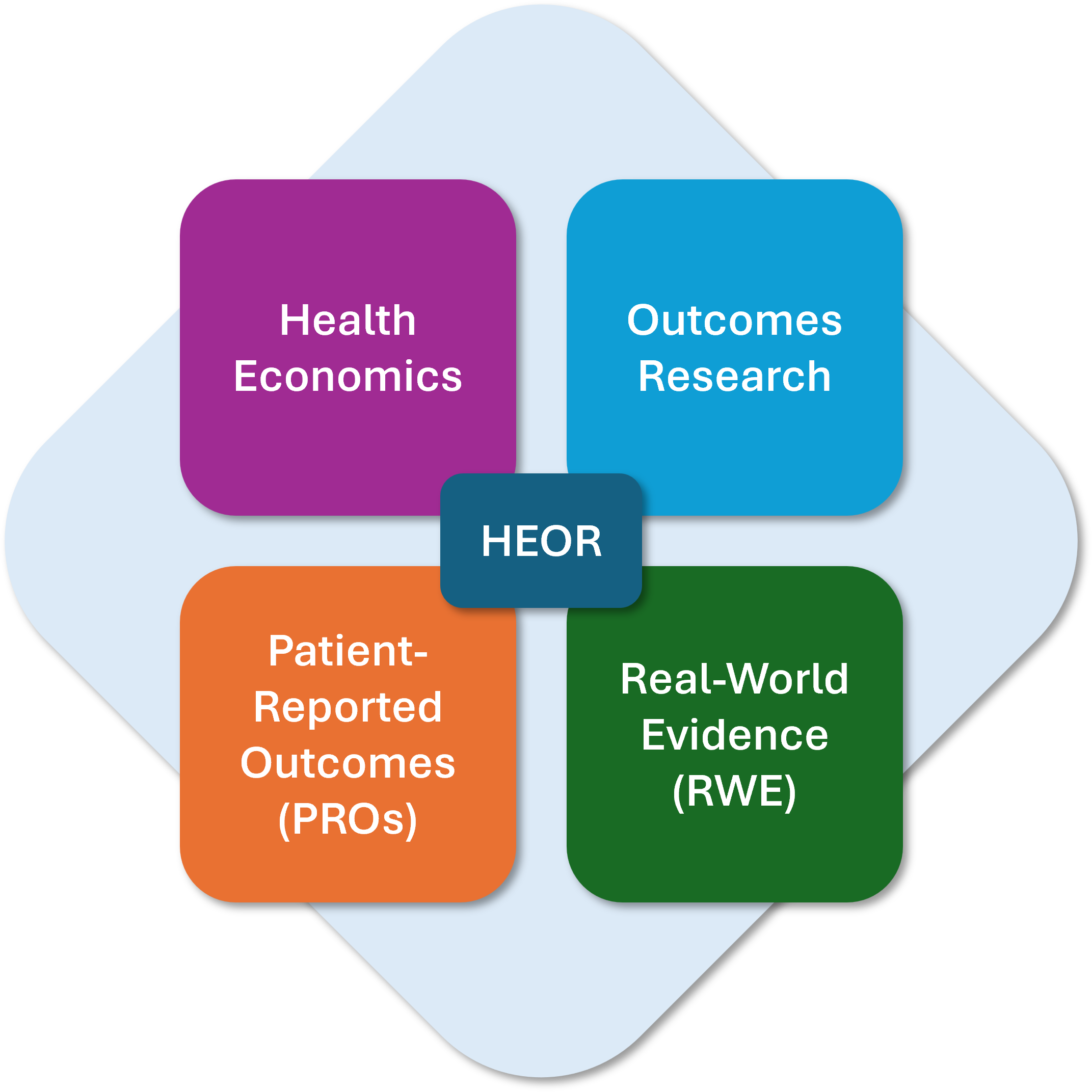
HEOR is a multidisciplinary field that evaluates the clinical, economic, and humanistic outcomes of medical interventions to determine their value and impact on society1. There are four key components in HEOR which include: health economics, outcomes research, patient-reported outcomes (PROs), and real-world evidence (RWE)1. Together, these components assess the economic impact and effectiveness of healthcare interventions while incorporating patients' perspectives in their treatment experiences.
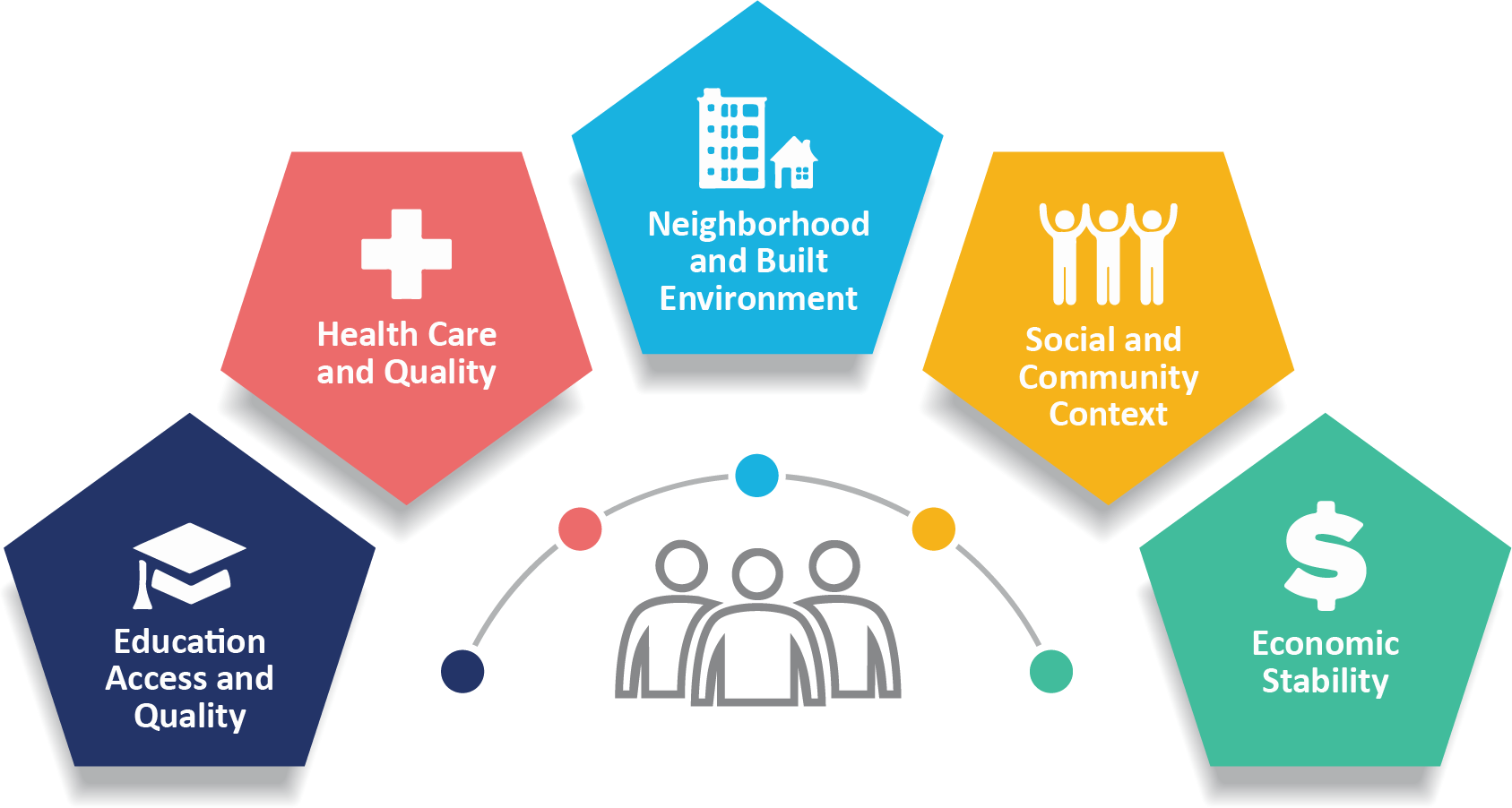
Historically, health economists focused primarily on the physical dimensions of health, with limited methods available to measure emotional well-being and mental health1. Now, PROs and QoL measures have expanded the scope of HEOR by evaluating how patients experience treatment both physically and emotionally. According to a video by Rob Abbott, the CEO of the Professional Society for Health Economics and Outcomes Research, when patients are asked to identify the factors that most influence their health-related decisions, they frequently cite access to stable housing, nutritious food, and social support1. Despite being commonly recognized as important contributors to overall wellbeing, these social determinants of health have previously fallen outside the traditional scope of HEOR. Fortunately today, they are becoming highly incorporated into everyday HEOR practices and applications.
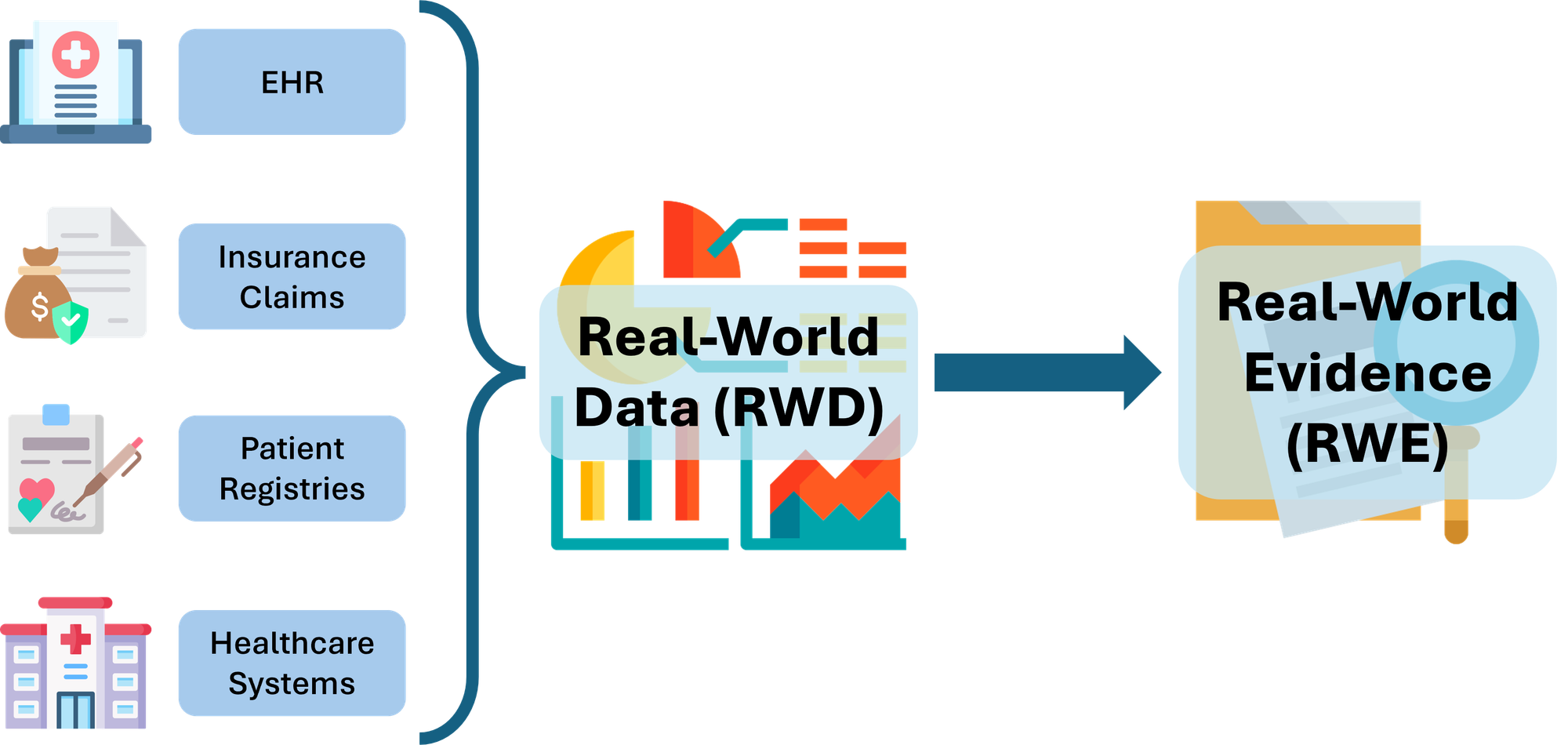
As mentioned previously, a major component of HEOR is the evaluation of real-world evidence (RWE). While clinical trials remain the gold standard for determining the safety and efficacy of medical treatments, HEOR seeks to understand how these therapies perform in routine clinical practice3. RWE provides insights into treatment effectiveness, healthcare utilization, patient outcomes, and economic impact outside the controlled environment of a clinical trial. Real-world evidence is generated from real-world data (RWD), which are collected from sources such as insurance claims databases, electronic health records, patient registries, and other healthcare systems4. The growing availability of these data sources has rapidly expanded RWD use in outcomes research and regulatory decision-making.
The United States Food and Drug Administration (FDA) began using RWD in 2011 to monitor the post-marketing safety of approved medications4. More recently, in 2025, the FDA launched the RWE Accelerate program to promote standardized approaches to real-world datasets and updated guidance on the use of de-identified medical data while maintaining patient privacy5. These initiatives serve as examples that reflect the growing role of RWE in supporting regulatory decision-making and advancing patient-centered healthcare.
Beyond assessing treatment effectiveness and supporting regulatory decisions, RWE contributes to multiple stages of the drug development process. It can help identify potential therapeutic targets and reveal gaps in existing treatment options6. Additionally, RWE provides smaller biotechnology companies with cost-effective approaches in generating evidence that supports regulatory submissions and market access strategies7. By highlighting unmet medical needs and practical treatment patterns, RWE contributes to the development of new therapies that can better address and improve patient needs.

As healthcare costs continue to rise, HEOR plays an essential role in ensuring that healthcare decisions are guided by data-driven decision making. Through the integration of health economics, outcomes research, PROs, and RWE, HEOR provides an extensive framework for assessing the value of healthcare interventions1. This approach helps decision makers and stakeholders analyze both the clinical benefits and economic impact of treatments from multiple perspectives. HEOR helps us make informed decisions that improve patient outcomes, promote efficient use of healthcare resources, and support the delivery of high-value care.
About the Author

References
- HEOR Explained. The Professional Society for Health Economics and Outcomes Research. 2026.
- Evidence Synthesis in Health Economics and Outcomes Research. The Professional Society for Health Economics and Outcomes Research. 2025.
- Health Economics and Outcomes Research (HEOR). AvalereHealth. 2026.
- FDA Use of Real-World Evidence in Regulatory Decision-Making. U.S. Food and Drug Administration. 2026.
- FDA Eliminates Major Barrier to Using Real-World Evidence in Drug and Device Application Reviews. U.S. Food and Drug Administration. 2025.
- Everyone is Talking About HEOR! What Exactly is it and Why is it Relevant to You? Facet Life Sciences. 2025.
- Real-World Evidence Opportunities for Emerging Biotech. United BioSource Corporation. 2023.

*Information presented on RxTeach does not represent the opinion of any specific company, organization, or team other than the authors themselves. No patient-provider relationship is created.