
Centanafadine: A Revolution in ADHD Treatment?
Centanafadine (Simtriyo), a first-in-class NDSRI for ADHD, offers a new treatment approach but carries important safety and abuse warnings.

Most treatments for attention-deficit/hyperactivity disorder (ADHD) are Schedule II stimulants: methylphenidate (Ritalin), dextroamphetamine (Adderall), and lisdexamfetamine (Vyvanse), to name a few. But in July of this year, a new drug – and a new drug class – made its way onto the market.
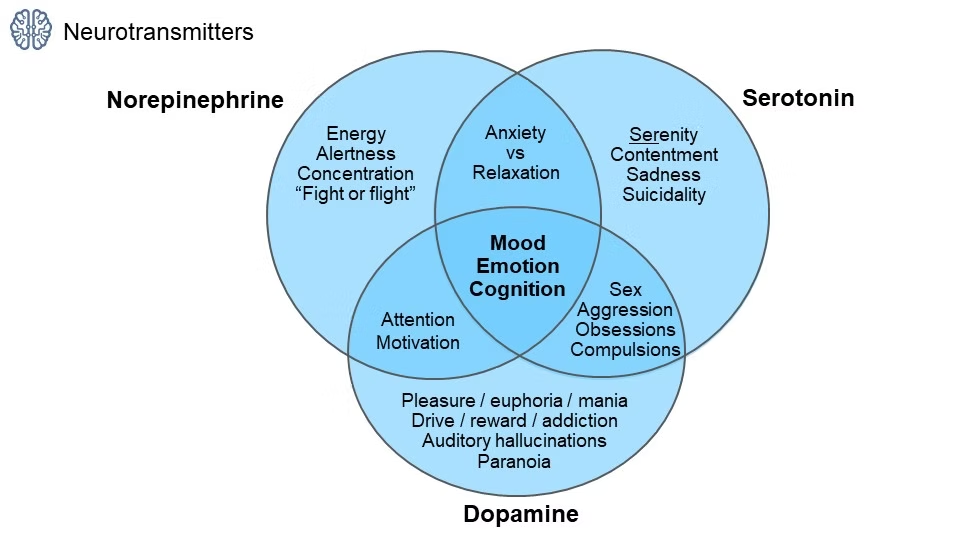
Centanafadine (Simtriyo) is a first-in-class medication for ADHD.1 It is a norepinephrine-dopamine-serotonin reuptake inhibitor (NDSRI).1 Before we look at the drug itself, let’s recap what these neurotransmitters do.
Norepinephrine, also called noradrenaline, is mostly responsible for the sympathetic nervous response (the “fight or flight” response).2 Norepinephrine plays an important role in alertness, arousal, attention, memory, and sleep.2
Dopamine is best known for its role in the brain’s “reward system.”3 It also has an impact on arousal, attention, memory, and sleep, as well as movement, behavior, and learning.3 Dopamine is implicated in disorders as different as Parkinson’s disease and schizophrenia.3
Serotonin has a major effect on mood and is thus the target of many antidepressants.4 It also helps regulate the sleep-wake cycle, both on its own and as its derivative chemical, melatonin.4
All three of these neurotransmitters act as chemical messengers between neurons in the central nervous system. They are released from the “presynaptic” neuron, cross the synaptic cleft between the cells, and bind to receptors on the “postsynaptic” neuron. After this, they are subject to reuptake, where they return to the presynaptic cell.
Centanafadine prevents that reuptake, at least for a while. This drug isn’t a pioneer in this regard: this technique is well-established in pharmacology, and all three of the aforementioned neurotransmitters have been targeted in previous drugs. Fluoxetine (Prozac) blocks the reuptake of serotonin, and bupropion (Wellbutrin) blocks both norepinephrine and dopamine reuptake. But centanafadine is the first drug on the market to inhibit the reuptake of all three.
Centanafadine is approved for ADHD in adults and for children 6 years and older weighing at least 20 kg.1,5 ADHD consists of inattentiveness and hyperactivity-impulsivity. These are measured on the Adult ADHD Investigator Symptom Rating Scale (AISRS). Adler, et al., analyzed two Phase 3 trials in 2022, and by day 42 of treatment, AISRS scores decreased by 25-32%, versus 18-21% for the placebo group.6 Statistically significant differences in these scores were recorded as early as day 7 in one of the studies.6 Both inattentiveness and hyperactivity-impulsivity decreased considerably across all race and gender groups.6
The most common adverse effects were dermatological and gastrointestinal in nature, though LexiComp notes an 11% incidence of hypertension as well.5,6 As a substrate for monoamine oxidase, centanafadine is contraindicated with the use of monoamine oxidase inhibitors.1

Centanafadine isn’t an amphetamine analogue like most other CNS stimulants for ADHD, so surely it’s better, right? Not so fast, as centanafadine still carries a boxed warning for abuse and misuse potential, just like methylphenidate and dextroamphetamine.5 It also carries a boxed warning for suicidal ideation, another mark against it that more established CNS stimulants don’t have.5
But the 2022 Adler article claims that this drug is potentially less likely to be abused than the typical CNS stimulants.6
“Preclinical studies and an exploratory human abuse liability study using an immediate-release (IR) formulation of centanafadine suggested that the abuse potential for centanafadine may be less than for stimulants that are commonly prescribed for ADHD,” according to Adler, et al.6
So, what gives? The 2022 article, an analysis of two separate Phase 3 trials, measures abuse potential with abuse potential-related treatment-emergent adverse effects. The relative frequencies of these side effects were similar across the placebo, 200-mg, and 400-mg trial groups.6 In fact, more subjects withdrew from the trial due to developing a rash than those who experienced abuse potential-related adverse effects.6
Table 1. Centanafadine abuse potential-related adverse effects frequency. Table by Dylan Hembrough.
Abuse potential-related adverse effects included dizziness, somnolence, altered mood, feeling abnormal, and confusion.6 While there were incidents of dizziness, the article notes that “no events of euphoric mood” were reported during either of the trials.6 The article also notes that dizziness was included per an agreement with the Food and Drug Administration, but is not usually counted as a “reinforcing symptom” that could lead to abuse.6
Even without abuse potential, suicidal ideation is worrying enough on its own. It is true that many antidepressants also carry a boxed warning for suicidal ideation in younger patients, but those drugs target depression and anxiety themselves. In other words, suicidality is likely already closely monitored in these patients.
Centanafadine targets ADHD, not depression. Up to 80% of patients with ADHD have a comorbid psychiatric disorder – often depression or anxiety – that is often overlooked.7 Suicidality may not be a top priority for monitoring in patients whose lives are more visibly affected by ADHD. And for patients as young as 6 years old, suicidal ideation may not be considered a legitimate threat.
The Adler article says that 12 subjects (1.4%) withdrew due to “psychiatric disorders,” but did not specify if these were related to suicidality.6 Fortunately, there were no deaths during these trials, and the article makes no further mention of suicidal ideation.6
Centanafadine is still in the process of becoming available. Time will tell if it proves superior to its stimulant predecessors.
If you or a loved one has ADHD and are interested in centanafadine, consult your primary care provider.
References
- Otsuka Receives FDA Approval for First-in-Class SIMTRIYO® (centanafadine) for the Treatment of Attention-Deficit Hyperactivity Disorder (ADHD) in Adults and Pediatric Patients Aged 6 Years and Older. Otsuka. Otsuka America Pharmaceutical. 2026 Jul 24.
- Norepinephrine (Noradrenaline). Cleveland Clinic. 2022 Mar 27.
- Dopamine. Cleveland Clinic. 2022 Mar 23.
- Serotonin. Cleveland Clinic. 2022 Mar 18.
- Centanafadine. Lexidrug.
- Adler LA, et al. Efficacy, Safety, and Tolerability of Centanafadine Sustained-Release Tablets in Adults With Attention-Deficit/Hyperactivity Disorder. J Clin Psychopharmacol. 2022 Jun 2;42(5):429-439.
- Olivardia R. Anxiety? Depression? Or ADHD? It Could Be All Three. ADDitude. 2025 Sep 8.
*Information presented on RxTeach does not represent the opinion of any specific company, organization, or team other than the authors themselves. No patient-provider relationship is created.