Critical Care Pharmacist: A Day in the Life
There is an emotional component to critical care medicine that takes time to adapt to, but working with the team to get through any difficult situations is always helpful.

Our "Day in the Life" series increases your knowledge about what career paths are available and what a typical workday entails for these professionals!
With so many career options available to pharmacists after graduation, the "Day in the Life" series is meant to provide you with insights into what it's like to be a pharmacist in various areas so that you can pursue what's right for you!

Introduction
1. Tell us a bit about your background (school, training, etc…)
- I attended Drake University in Des Moines, Iowa, for my pre-pharmacy and pharmacy education. I then completed a PGY1 residency at Parkview Health in Fort Wayne, Indiana. I had a thing for moving to states that started with an I, apparently. I have worked at SSM Health DePaul Hospital for the past 9 years, both in the Emergency Department for 4 years and in the Critical Care setting for the past 5 years.
2. What are some of the best and worst things about working as a clinical pharmacist primarily covering renal patients?
- Critical care medicine is a fast-paced environment where a patient's status can quickly change, both for better and for worse. One of my favorite aspects of my position is working with the multidisciplinary team to manage acutely decompensating patients. It is fulfilling to see interventions having a positive impact and to see patients improve and graduate from the ICU to a general medical floor. A part of critical care medicine that is important to acknowledge is that not every patient will get better, and as a result, difficult conversations will be had, and decisions must be made. There is an emotional component to critical care medicine that takes time to adapt to, but working with the team to get through any difficult situations is always helpful.
3. What are the main barriers to entry? (PGY1 or PGY2, fellowships, 3-4 years experience, etc…)
- Typically, to work as a clinical pharmacist in the critical care setting, a PGY1 residency is the minimum requirement to ensure familiarity with common critical care disease states. Many critical care pharmacists also complete a PGY2 residency in critical care. I completed a PGY1 residency and then worked in the Emergency Department, while also cross-covering in the ICU for 4 years, before transitioning into my full-time role as a critical care pharmacist. It is also recommended to obtain board certification, such as becoming a Board-Certified Critical Care Pharmacist (BCCCP), and to remain active in continuing education to maintain these certifications, as they help keep clinicians up to date with newly published literature.
4. Can you provide some background into how you found clinical pharmacy as your field of interest?
- In pharmacy school, I never really knew exactly what I wanted to do after graduation. With an open mindset, I chose a variety of rotations during my APPE year to help determine which setting best fit my personality and career aspirations. I completed my very first clinical rotation in a neuro ICU and found that I really enjoyed the team dynamics. All the staff seemed highly knowledgeable, and each department participating in rounds contributed important information and ideas to each patient’s care. It was during this experience that I decided I wanted to pursue clinical pharmacy so I could continue growing my clinical knowledge and eventually serve as the medication expert on a multidisciplinary healthcare team.
- Based on my rotation experiences, I pursued residency with the idea that critical care medicine/emergency medicine was the setting that most intrigued me. I completed many rotations in these areas in my PGY1 year, and those experiences further solidified my choice of specialty. My early career work in the Emergency Department then provided me with invaluable time management skills as well as resource prioritization, before my transition into critical care medicine exclusively.
5. What are some of the challenges you face as a clinical pharmacist?
- As with any job, there are always challenges to overcome. One challenge I encounter at times is making medication recommendations to providers who may not initially be receptive to suggested changes. It is important to consistently develop strong working relationships with other members of the healthcare team to foster collaboration and improve the acceptance of pharmacotherapy recommendations. This is all part of working as a team, and it is essential to maintain mutual respect for those working with and around you.
6. How can current students or pharmacists best prepare for a career in clinical pharmacy?
- The best way to prepare for a career in clinical pharmacy is to develop a strong foundational knowledge of pharmacotherapy. By understanding the basic principles of drug mechanisms and interactions, you'll set yourself up for success when expanding into more specialized and niche areas. Regardless of the area of clinical pharmacy – whether critical care, ambulatory care, or internal medicine, there will always be nuances to learn. A solid knowledge base provides a strong platform for continued growth and success.
- Another important way to prepare is to develop strong communication and teamwork skills. A large part of clinical pharmacy involves collaborating with various members of the healthcare team, including nurses, patient care technicians, physicians, nurse practitioners, and physician assistants, among others. By building effective communication and teamwork skills, you improve your ability to develop those strong working relationships that support meaningful pharmacotherapy recommendations and ultimately enhance patient care.
7. How do you keep up with the ever-changing literature and new medications coming to market?
- It can be tough to stay up to date with the constantly changing medical literature, but there are several strategies I use to remain current. These include membership in the Society of Critical Care Medicine (SCCM), receiving email updates from major medical journals, and precepting students and residents.
- Through SCCM, I receive notifications on guideline updates and have access to continuing education presentations and educational sessions that give a quick rundown of changes to the literature. I also have the option to attend conferences through this organization, which further enhances my knowledge and exposure to emerging evidence. In addition, I utilize email alerts from major journals such as JAMA and NEJM to stay informed about new primary literature relevant to my specialty as it is published. However, one of the most impactful ways I stay current is through precepting students and residents. Engaging in discussions about guideline recommendations compared to what is commonly practiced helps me revisit and reinforce concepts I may not encounter regularly. Ultimately, being an effective preceptor requires a commitment to continuous learning, which is an aspect of the role I genuinely enjoy.
8. What are some of the most common questions you are asked on the job?
- Some commonly asked questions involve medication indications and the side effects to monitor after administration. Many medications used in the ICU are administered intravenously and have a rapid onset of action, so it is important for staff to understand what to monitor for and to feel comfortable with the medications they are administering.
- Another common question I frequently receive is whether certain medications can be administered through an enteral tube (e.g., NG, OG, or Dobhoff). Not all medications are appropriate for enteral tube administration, and alternative formulations or routes may be chosen to get around this barrier. There are several resources available to help determine the most appropriate method of administration through enteral routes. As a critical care pharmacist, it is important to be familiar with and utilize these resources.
9. What is the biggest impact you think you have on patient care?
- I believe the greatest impact I have on patient care is enhancing other healthcare providers’ knowledge of medications, thus helping to reduce medication errors. As the medication expert on the team, it is important to provide education on new therapies and to address any emerging trends in questions related to specific topics.
- By being a friendly face for staff, I can help promote open communication and ongoing education regarding medications. This collaborative environment can ultimately help prevent medication errors and improve overall patient safety.
10. What are your responsibilities/tasks during a typical workday?
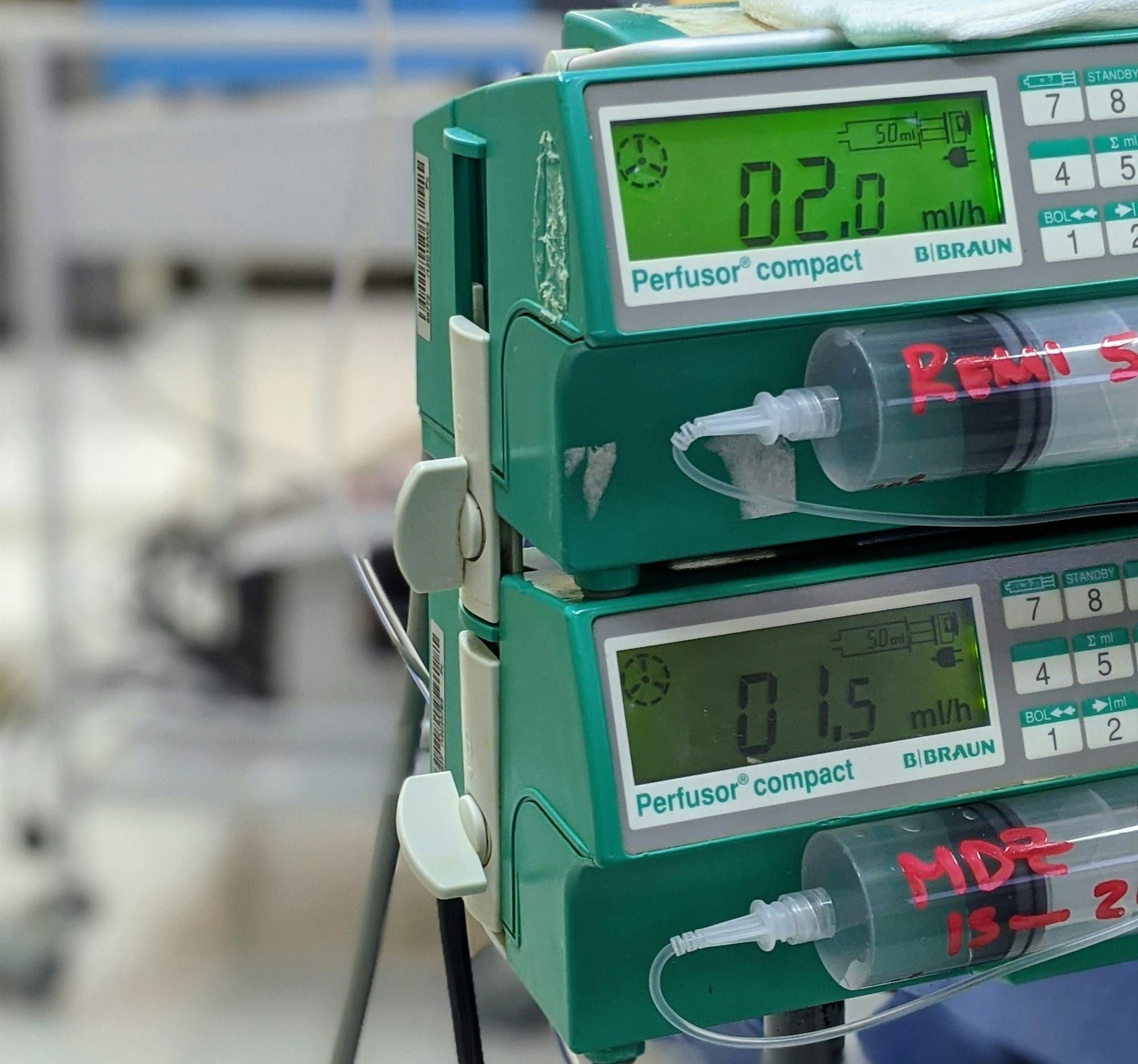
- A typical day in the ICU begins with reviewing and preparing patient workups in anticipation of rounds. This is followed by multidisciplinary rounds with the healthcare team, which may include nurses, respiratory therapists, nurse practitioners, dietitians, and physicians. Rounds can last anywhere from 30 minutes to two hours on a typical day, and this is when I provide pharmacotherapy recommendations to the team.
- The rest of the day is typically spent completing pharmacy-to-dose consults, including vancomycin, warfarin, aminoglycosides, and TPN dosing, as well as performing medication reconciliations upon ICU admission and discharge. Throughout the day, I sit in the ICU answering questions that come up and assisting with emergent situations such as rapid sequence intubation (RSI), cardiac arrests, procedural sedation, etc. Each day varies, but these are my primary responsibilities.
- I also serve as a preceptor for students and PGY1 residents, and on those days, we typically incorporate afternoon topic discussions as a team.
11. What are some helpful tips for everyday pharmacists to know about inpatient care?
- For anyone considering a career in inpatient pharmacy, and specifically critical care clinical pharmacy, I would recommend trying not to get overwhelmed when starting. The hospital can be an overwhelming environment, especially when working alongside professionals from many different disciplines with a wide range of experience and personalities. Take your time building your knowledge and confidence while recognizing that everyone begins their career feeling nervous or uncertain.
- It is important to remember that everyone shares the same objective: to get patients better and improve their care. Each team member brings unique expertise to the table, and collaboration is essential to achieving that goal.
The next two questions are more entertaining. Please answer some (or all) if you would like!
1. What is one book you would recommend to a friend?
I have two answers for this:
- For a non-healthcare-related book, I would recommend The Nightingale by Kristin Hannah. It is a historical fiction novel set during World War II and is one of my absolute favorites. If you decide to read it, be sure to have tissues on hand.
- For a healthcare-related book, I would recommend This Is Going to Hurt by Adam Kay. Written by a former NHS physician turned comedian, the book is based on his diary entries from his residency and training years. It captures the intensity of medical training and includes the kinds of stories that can only come from working in healthcare. It is a book I often recommend to anyone going into healthcare, as well as to those around me who want to hear about an accurate depiction of life in the hospital.
2. Which pharmacy specialty is the best and why (not allowed to pick your own)
- Kind of cheating, but since I am now in critical care and no longer in emergency medicine, I would say emergency medicine. You never know what is going to walk or roll through the door, which requires quick thinking and strong prioritization skills. Plus, the teamwork in this setting is excellent, making it a fun place to work.
*Information presented on RxTeach does not represent the opinion of any specific company, organization, or team other than the authors themselves. No patient-provider relationship is created.